Sustainability is no longer a trend—it’s a necessity. As the UK moves towards a greener future, integrating renewable energy sources into construction projects is becoming standard practice rather than a luxury. One of the most effective ways to do this is by including solar panels in every new build. Not only do they reduce a building’s carbon footprint, but they also offer long-term savings, enhance property value, and future-proof homes against rising energy costs. For architects and developers committed to green architecture, solar energy should be at the core of their design philosophy.
Green architecture focuses on minimising the environmental impact of buildings through energy efficiency, sustainable materials, and eco-friendly design. With increasing pressure from regulatory bodies and public expectations, developers are being held accountable for the environmental impact of their projects. Incorporating solar panels is a clear, measurable way to meet these demands. Solar energy aligns with the UK’s net zero targets, supports sustainable living, and contributes to the broader fight against climate change.
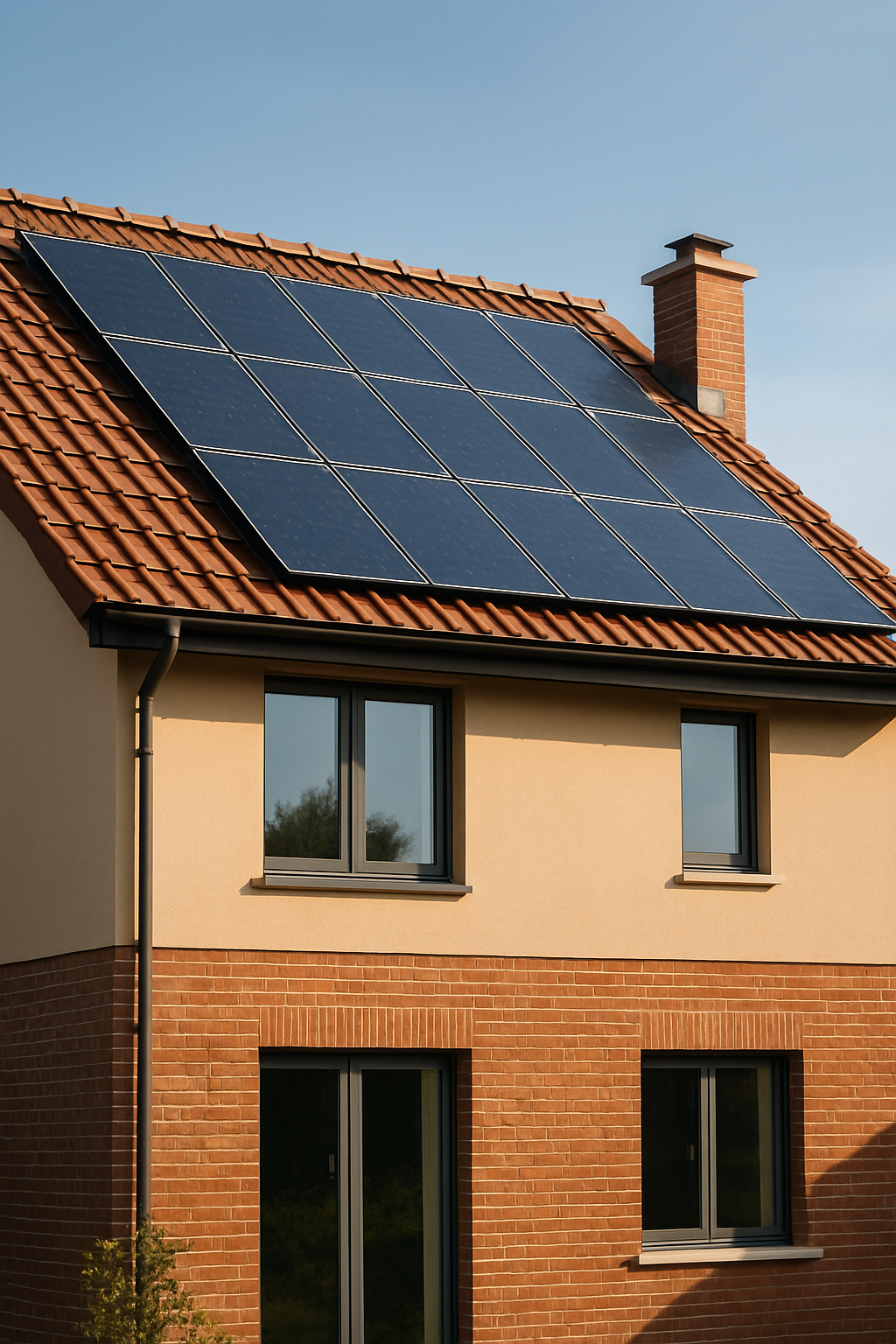
Integrating solar panels during the initial design phase offers greater efficiency and aesthetics compared to retrofitting. Architects can plan roof orientation, pitch, and shading with solar optimisation in mind, ensuring maximum sun exposure and minimal energy loss. By embedding solar into the architecture itself—whether through rooftop arrays, solar tiles, or even building-integrated photovoltaics (BIPV)—designers can maintain the visual integrity of the structure while boosting functionality. The result is a seamless blend of form and sustainability.
One of the most compelling reasons to incorporate solar panels into new builds is the long-term financial benefit. Although there is an upfront installation cost, homeowners can expect to see a return on investment within 8 to 12 years through lower electricity bills. In many cases, homes can produce more energy than they consume, especially if paired with solar battery storage.
For developers, including solar panels as a standard feature can increase a property’s value and market appeal. Environmentally conscious buyers are more likely to be drawn to homes that come equipped with energy-saving technology. In competitive housing markets, solar-ready homes often sell faster and at higher prices.
The UK government has put policies in place to encourage the adoption of renewable energy in construction. Regulations like the Future Homes Standard, set to take full effect by 2025, will require new homes to produce 75-80% fewer carbon emissions than those built to current standards. Solar panels are a key way for developers to meet these stricter regulations.
Additionally, under the Smart Export Guarantee (SEG), homeowners can sell unused electricity back to the grid, creating an additional revenue stream. Although grants and subsidies have become more limited compared to previous years, these schemes still make solar installations a financially attractive choice.
Solar panels empower homeowners by reducing reliance on traditional energy suppliers. With the energy market becoming increasingly volatile, having a self-sustaining energy source offers stability and predictability in monthly bills. When coupled with battery storage, solar panels provide energy even during grid outages, increasing the home’s resilience and self-sufficiency. This level of independence is particularly appealing as energy prices continue to fluctuate and concerns about supply security grow.
Every solar panel installed contributes to reducing greenhouse gas emissions. A typical residential solar PV system in the UK can save around 1.5 tonnes of CO₂ annually. Multiply this impact across thousands of new builds, and the environmental benefits are significant.
Building homes with solar energy from the outset sets a precedent for sustainable living. It also supports broader climate action plans such as the UK’s commitment to achieve net zero carbon emissions by 2050. Green architecture—especially with solar integration—plays a vital role in achieving this target.
As technology advances, solar systems are becoming more efficient, more compact, and more affordable. Innovations such as solar shingles and integrated battery systems are transforming how solar is installed and used. For developers, staying ahead of these trends means building homes that remain relevant and efficient for decades.
Incorporating solar panels now means fewer retrofits later, lower lifetime costs, and better energy performance. It’s a smart investment in a rapidly changing housing landscape.
Despite the benefits, some developers hesitate to adopt solar because of perceived complications—cost, design limitations, or uncertainty about local regulations. However, these concerns are becoming less valid. Installation costs have decreased, planning permissions for solar are now more straightforward under Permitted Development Rights, and modern solar solutions offer flexibility for nearly any roof type or design.
By working with experienced solar consultants and energy specialists from the planning phase onward, these barriers can be addressed efficiently and effectively.
In the context of modern construction and sustainable living, solar panels should no longer be viewed as an optional upgrade. They are a fundamental part of responsible design. From improving energy efficiency to meeting government regulations, enhancing property value to supporting climate goals—solar belongs in every new build.
Green architecture isn’t just about making homes look sustainable; it’s about ensuring they function sustainably for generations to come. By embedding solar solutions into every new build, we move one step closer to a low-carbon future that benefits homeowners, developers, and the planet.
If you need help with this topic then please fill out the form below and we'll put you in touch with an expert architect local to you who can help. Alternatively you can email us: email us